
The Places in Your Home That Wear Out First—and Why
A home can look perfectly maintained overall while certain spots seem to age twice as fast as everything around them.
The finish on one section of hardwood flooring starts looking dull. A frequently used cabinet door becomes loose. Paint disappears from the edge of a door frame. The third stair tread looks noticeably more worn than the tenth. Meanwhile, another room built with many of the same materials still looks almost new.
There is usually a simple explanation: homes do not wear evenly.
Daily routines create predictable patterns of wear and tear. Foot traffic, moisture, sunlight, friction, impacts, temperature changes, pets, furniture, and even the way people enter and leave a room can determine which materials show their age first.
Understanding these high-wear areas of a home can help homeowners recognize normal aging, catch developing problems earlier, and choose better materials when it is time to remodel.
Here are some of the places carpenters commonly expect to show wear first—and why they deserve a little extra attention.
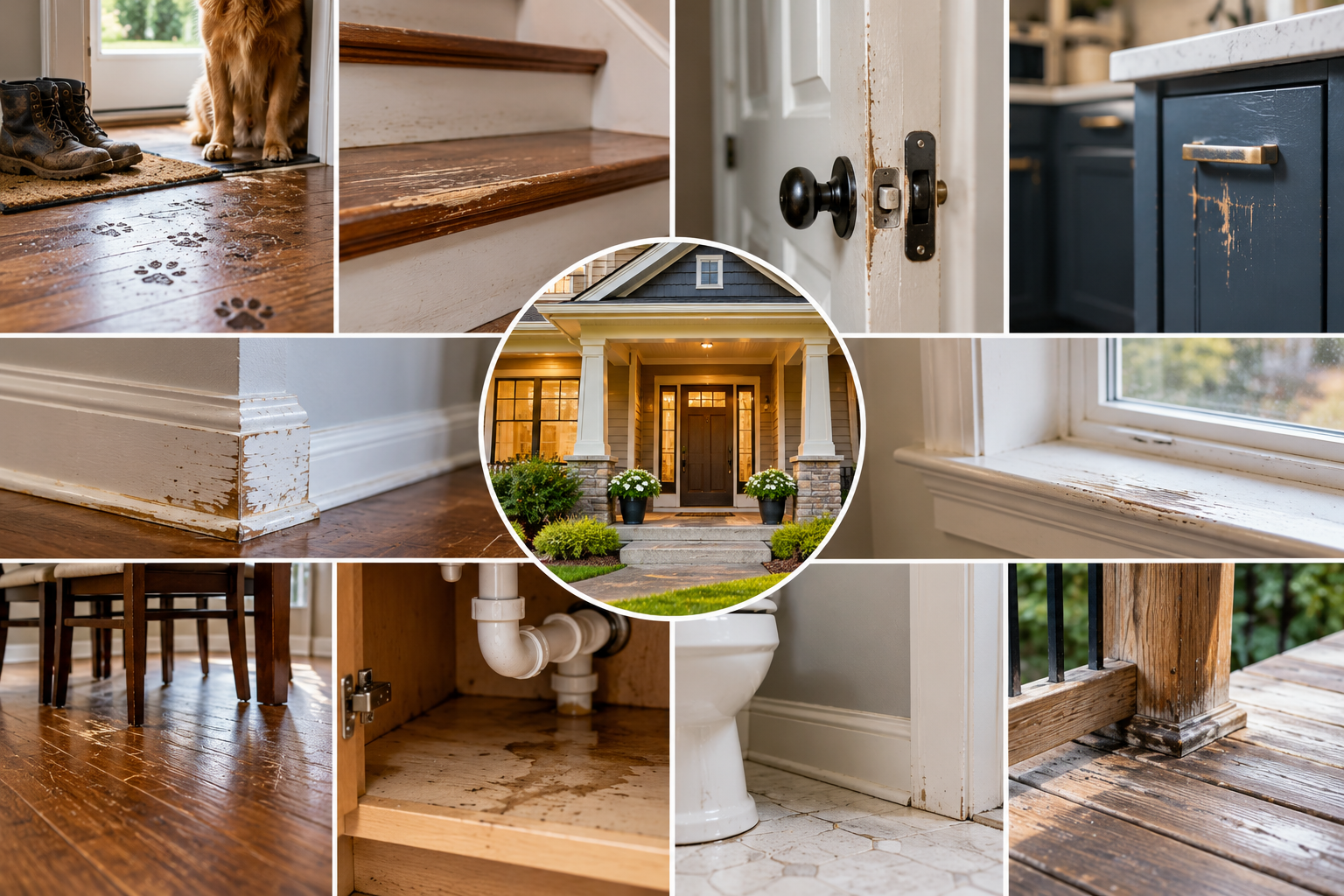
Why Some Parts of Your Home Wear Out Faster Than Others
Think about a grocery store.
Thousands of people might visit the building, but they do not walk randomly across every square foot of flooring. Most follow similar paths: through the entrance, down the main aisles, toward the registers, and back out the doors.
A house works in much the same way.
Family members repeatedly walk the same routes between the kitchen, living room, bedrooms, bathrooms, stairs, and exterior doors. Hands grab the same cabinet pulls. Shoes hit the same section of flooring. The same doors open dozens of times every day.
That concentrated use creates high-traffic areas.
Other parts of the home experience different stresses. Bathrooms deal with moisture. Windows receive sunlight. Exterior doors experience temperature and humidity changes. Kitchens combine water, heat, grease, impacts, and constant activity.
Often, it is not one dramatic event that causes something to wear out. It is hundreds or thousands of tiny events happening in the same place.
Entryways and Mudrooms Take the First Hit
The entrance to a home is essentially the transition point between the outdoors and indoors.
Shoes bring in dirt, sand, gravel, water, road salt, and other debris. Bags get dropped. Boots scrape against trim. Doors swing open and closed. Wet coats may drip onto nearby surfaces.
Even tiny particles of dirt can contribute to wear when they are repeatedly pressed and dragged across flooring under shoes.
Imagine putting a small amount of sand between two surfaces and rubbing them together. Over time, that abrasion can dull a finish.
This is one reason the flooring immediately inside an exterior door may begin showing wear long before flooring farther into the room.
Homeowners should pay particular attention to flooring transitions, baseboards, door trim, thresholds, and the bottom portions of exterior doors in these areas.
Good mats, regular cleaning, appropriate flooring choices, and quickly drying standing water can help reduce unnecessary wear.
Hallway Floors Develop Invisible Traffic Lanes
Hallways are another excellent example of concentrated wear.
People rarely walk along every inch of a hallway. Most naturally travel near the center or follow the shortest path around corners.
After years of use, that repeated route can become visible.
Depending on the flooring material, homeowners may notice differences in sheen, scratches, worn finishes, compressed carpet fibers, or other changes along the most frequently traveled path.
Furniture placement can make these patterns even more noticeable. A sofa, table, or cabinet might force everyone to walk through one narrow section of a room.
When planning a remodel, it is worth thinking about how people actually move through the home, not simply how the room looks when it is empty.
Stairs and Handrails Handle More Abuse Than You Think
Few components inside a home experience the concentrated forces that stairs do.
Every trip upstairs or downstairs places weight onto individual stair treads. People also tend to step in similar locations.
The center or preferred side of a tread may therefore wear faster than its edges.
Handrails experience another kind of wear. Hands repeatedly slide across the same surface, transferring oils, moisture, and dirt while gradually affecting the finish.
Stairs can also develop squeaks or movement over time. A squeak does not automatically mean a staircase is unsafe, but a new or worsening sound—especially when combined with visible movement—deserves attention.
Watch for loose railings, noticeable tread movement, damaged nosings, cracked components, or fasteners that appear to be working loose.
Because stairs are a safety feature as well as a finish feature, structural movement should not simply be covered with paint or caulk.
Door Jambs, Casings, and Interior Doors Wear Down From Constant Use
Consider how many times the bathroom, bedroom, pantry, or garage-entry door gets used during an average week.
Now multiply that by several years.
Doors are moving assemblies, so they naturally experience wear differently from stationary walls.
Hinges carry the weight of the door. Latches repeatedly contact strike plates. Hands touch the same areas around knobs and handles. Door edges may rub if alignment changes.
Homeowners may eventually notice:
Doors rubbing against jambs
Loose handles or hinges
Worn paint around frequently touched areas
Damaged casing near the floor
Latches that no longer line up correctly
A door that suddenly begins sticking should not automatically be trimmed down.
The cause could be as simple as a loose hinge, or it could relate to seasonal wood movement, humidity, or movement elsewhere in the structure.
Finding the reason first is usually better than immediately removing material from the door.
Baseboards Take Damage From Shoes, Vacuums, Furniture, Kids, and Pets
Baseboards are positioned exactly where many household impacts happen.
Vacuum cleaners bump them. Mop heads rub against them. Shoes kick them. Furniture touches them. Pet claws scratch them. Toys collide with corners.
Then there is moisture.
Repeated wet mopping or a small unnoticed spill can be particularly hard on certain trim materials.
A useful example is the baseboard near a pet's water bowl. A few drops of water may seem harmless. But if water reaches that same area several times a day for years, the repeated exposure can eventually affect paint, caulk, trim, or nearby flooring.
Homeowners should watch for swelling, separating joints, peeling paint, soft material, or recurring discoloration rather than assuming every mark is cosmetic.
Kitchen Cabinets Wear Fastest Around the Most-Used Areas
Kitchen cabinets rarely age uniformly.
The cabinet holding holiday serving dishes might be opened a few times per year. The trash cabinet could be opened several times before lunch.
That difference matters.
High-use cabinet doors and drawers experience repeated movement at hinges, slides, handles, and attachment points. Areas near cooking surfaces also encounter grease, heat, steam, and frequent cleaning.
Pay attention to the cabinets surrounding:
The trash and recycling area.
The sink.
The dishwasher.
Frequently used cookware and dishes.
Food-preparation areas.
Loose hinges and handles are often relatively minor when addressed early. Leaving hardware loose can allow movement to continue and potentially enlarge screw holes or place additional stress on surrounding material.
The Sink Cabinet Is One of the Hardest-Working Cabinets in Your Kitchen
If there is one cabinet worth checking periodically, it is the cabinet beneath the kitchen sink.
It contains plumbing connections and is often used for cleaning products, trash bags, or other household supplies. That combination can make a small leak surprisingly easy to miss.
A slow drip may not create a dramatic puddle on the kitchen floor.
Instead, water can remain inside the cabinet where homeowners rarely look.
Over time, moisture can cause staining, odors, swelling, deterioration, or other damage depending on the cabinet material.
Think of it like leaving a damp towel on a wood surface. A few minutes may cause no problem. Repeated or prolonged exposure is a different story.
Periodically emptying the cabinet and checking around plumbing connections, the cabinet floor, and nearby surfaces can help identify moisture before it becomes a larger repair.
Bathroom Trim and Woodwork Have Moisture Working Against Them
Bathrooms are challenging environments because humidity can change quickly.
A hot shower can fill the room with moisture, and surfaces around the tub, shower, sink, window, and floor may experience repeated splashing or condensation.
Wood and wood-based products react to moisture differently depending on the material and finish.
Homeowners may notice paint deterioration, swollen trim, separated joints, failing caulk, or discoloration in repeatedly damp areas.
Good ventilation matters.
Using an appropriately installed bathroom exhaust fan and addressing water that regularly reaches woodwork can help extend the life of finishes and trim.
If one section keeps deteriorating after being repaired, look for the source of the moisture rather than repeatedly treating only the visible damage.
Window Sills Deal With More Than Just Sunlight
Window sills can experience a surprising combination of stresses.
Sunlight reaches them repeatedly. Condensation may develop on windows. Plants can leave moisture behind. Pets may jump onto them. Open windows can occasionally allow rain inside.
That makes the sill a small but demanding part of the home.
One overlooked problem is condensation.
If water repeatedly collects along the bottom of a window and reaches surrounding woodwork, homeowners may eventually see peeling finishes, staining, swelling, or deterioration.
The lesson is simple: water showing up repeatedly in the same location deserves investigation.
Wiping it away helps with the immediate problem, but understanding why it keeps appearing is more useful long term.
Floors Under Dining Tables and Furniture Wear Differently
It might seem as though flooring underneath furniture should be protected.
Sometimes it is.
But the flooring immediately around furniture can experience significant wear.
Dining chairs are a perfect example. A chair may slide backward and forward several times during one meal. Multiply that movement by several people, several meals per day, and several years.
That is a lot of repeated friction concentrated into small areas.
Furniture pads can help, but they need occasional inspection. Dirt trapped underneath a worn pad can itself become abrasive.
Heavy furniture can also create indentations in some flooring materials.
When rearranging a room, homeowners are sometimes surprised to discover that previously covered flooring looks noticeably different from the exposed area because of sunlight, wear, or aging of the finish.
Laundry Rooms Combine Weight, Vibration, Moisture, and Movement
Laundry rooms do a lot of work in relatively little space.
Washers and dryers are heavy. Washing machines vibrate. Water supply and drain connections are nearby. Laundry baskets scrape against doors and trim.
If a washing machine develops a leak, the surrounding flooring and baseboards may be among the first materials affected.
Even without a major leak, homeowners should periodically inspect hoses, connections, flooring edges, and nearby trim for signs of moisture.
A small amount of prevention is much easier than discovering water damage after it has spread beneath finished materials.
The Areas Around Exterior Doors Face Wear From Both Inside and Outside
Exterior doors sit between two very different environments.
The exterior side may face rain, sunlight, wind, snow, and temperature changes. The interior side experiences heating, cooling, household humidity, and everyday use.
Meanwhile, the threshold is stepped on constantly.
The bottom portions of door jambs and exterior trim deserve particular attention because water tends to travel downward and collect in vulnerable locations.
Watch for peeling finishes, gaps, soft wood, staining, failed sealant, or changes in how the door operates.
Catching a small exterior maintenance issue early can sometimes prevent moisture from reaching deeper parts of the assembly.
Deck Stairs, Railings, and High-Traffic Areas Often Show Their Age First
Decks experience the same concentrated traffic patterns as interior floors, except they also face the weather.
The route from the exterior door to the stairs may receive far more foot traffic than the corners of the deck.
Stair treads experience repeated impacts.
Railings are grabbed and leaned against.
Areas beneath planters, grills, furniture, and mats may also experience different moisture and drying conditions from exposed areas.
Homeowners should inspect more than the visible surface of the decking.
Connections, stairs, railings, framing, and areas where the deck interacts with the home are all important parts of the structure.
A deck can look worn without being structurally unsafe, and it can also look attractive while hiding a problem underneath. Appearance alone does not tell the entire story.
Normal Wear vs. Damage: How Homeowners Can Tell the Difference
Not every scratch, gap, or squeak means something is wrong.
Homes are used, and materials age.
Normal cosmetic wear might include minor scratches, worn finishes, small dents, or fading.
More concerning signs can include soft or deteriorating wood, recurring moisture, significant movement, loose guards or handrails, rapidly changing cracks or gaps, persistent swelling, or components pulling away from their connections.
The key distinction is often whether the issue is merely changing the appearance or affecting the way something performs.
When safety or structural performance could be involved, professional evaluation is a better approach than guessing.
Small Signs of Wear You Should Not Ignore
Homes often give small clues before repairs become obvious.
A door starts rubbing.
A cabinet hinge loosens repeatedly.
One section of baseboard begins swelling.
A stair tread moves slightly.
Paint keeps peeling in exactly the same spot.
The important word is repeatedly.
If the same problem keeps returning after cosmetic repairs, something may be causing it.
For example, repainting a water-stained piece of trim might make it look new temporarily. But if moisture is still reaching that location, the stain—or a larger problem—may return.
Instead of asking only, "How do I make this look better?" it can be useful to ask, "Why did this happen here?"
How to Make High-Wear Areas of Your Home Last Longer
Preventing every sign of wear is unrealistic.The goal is to slow unnecessary deterioration. Simple habits can make a difference:
Use quality entry mats to reduce dirt and grit entering the home.
Clean spills promptly, especially around wood and wood-based materials.
Use furniture pads and inspect them periodically.
Keep cabinet hinges, handles, and other hardware properly tightened.
Avoid repeatedly soaking baseboards during floor cleaning.
Maintain appropriate ventilation in moisture-prone rooms.
Inspect exterior doors, windows, decks, and trim periodically.
Address small leaks rather than waiting for visible damage to become severe.
Most importantly, pay attention when something changes.
Homeowners know their houses better than they sometimes realize. If a door that has worked perfectly for ten years suddenly will not close, that change is useful information.
Repair or Replace? A Carpenter’s Advice on Knowing When It Is Time
Wear does not automatically mean replacement.
A loose hinge may need adjustment.
Scratched trim may need refinishing.
A damaged section of molding may be repairable or replaceable without removing trim throughout the room.
On the other hand, materials that are severely deteriorated, repeatedly exposed to moisture, structurally damaged, or no longer functioning properly may require more extensive work.
The decision should consider the cause, extent of damage, material, safety, repairability, and the homeowner's long-term plans.
This is especially important with older homes.
Replacing something simply because it is old can mean unnecessarily removing quality material. At the same time, keeping a component solely because it is original does not make sense if it is badly deteriorated or unsafe.
A good repair strategy starts with understanding what is actually happening.
Choosing Materials Based on How You Actually Live
One of the best lessons homeowners can take from wear patterns is that material selection should reflect daily life.
A showroom sample does not have children running across it.
It does not have a dog waiting at the back door with muddy paws.
It does not have someone opening the trash cabinet twenty times a day.
When remodeling, think beyond appearance.
A household with pets may prioritize scratch resistance and easy cleaning. A busy family entrance may benefit from durable flooring and trim details. A frequently used kitchen should have hardware and finishes selected with daily use in mind.
There is nothing wrong with choosing materials because they look beautiful.
But beautiful materials that also fit the way a household actually lives are much easier to appreciate years later.
Final Thoughts: Pay Attention to the Parts of Your Home You Use the Most
The first places to show wear are often the places that work the hardest.
Entryways welcome everyone into the house. Stairs carry people between floors. Cabinet doors are opened thousands of times. Baseboards quietly absorb bumps and scrapes. Deck stairs deal with footsteps and weather year after year.
Some wear is simply evidence of a home being lived in.
But understanding why certain areas of a home wear out faster helps homeowners recognize when something is ordinary aging and when it may be worth investigating.
The next time a piece of trim looks unusually worn or a door suddenly starts sticking, do not look only at the damage.
Look at what happens around it every day.
Sometimes the location of the wear tells just as much of the story as the wear itself.
For homeowners in Bloomington-Normal and surrounding Central Illinois communities, Composite Carpentry can help evaluate worn or damaged carpentry, identify practical repair options, and plan remodeling projects with materials suited to the way the home is actually used.