
What Is the Kitchen Work Triangle? A Simple Explanation for Homeowners
The kitchen work triangle is a layout concept that focuses on how you move between the three most-used areas in your kitchen: the sink, the stove, and the refrigerator. The idea is simple. When these three areas are positioned thoughtfully, cooking feels easier, faster, and far less frustrating.
Think about making a regular weeknight dinner. You grab ingredients from the fridge, rinse vegetables at the sink, and move back and forth to the stove to cook. If those areas are spread too far apart, you end up walking laps around the kitchen. If they are too close together, you feel cramped and constantly in the way. The work triangle aims to strike a balance so movement feels natural.
From a professional carpentry perspective, it can be explained this way: the work triangle is less about strict measurements and more about how your body moves through the space. A kitchen can look beautiful on paper and still feel awkward in real life if the workflow is ignored.
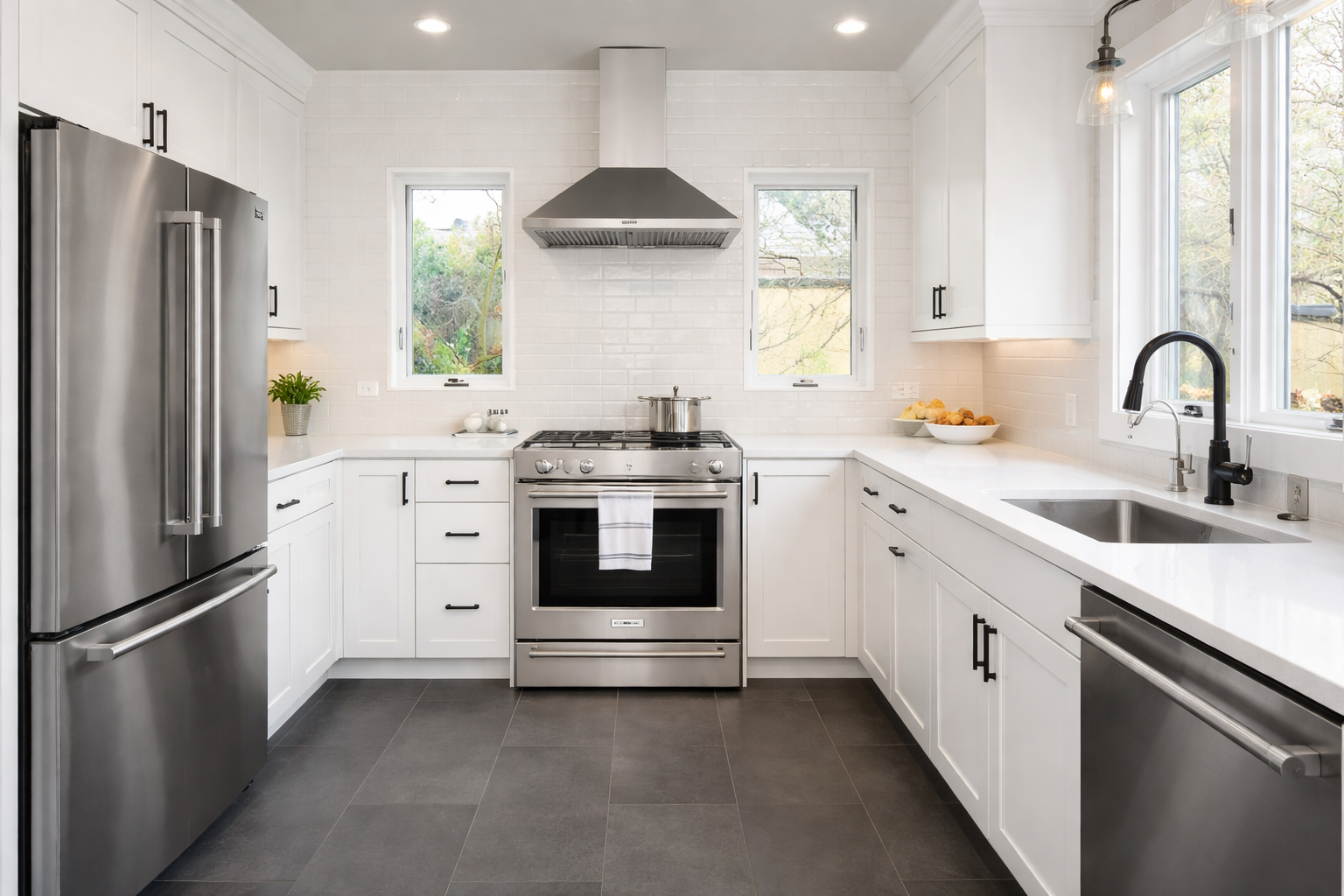
The Three Key Areas of the Kitchen Work Triangle: Sink, Stove, and Refrigerator
Each point of the kitchen work triangle plays a specific role in how your kitchen functions day to day.
The sink is often the true workhorse of the kitchen. It is where food prep starts, where hands get washed, and where cleanup happens. In many real homes, the sink is used more than the stove, especially for families who cook often.
The stove or cooktop is where active cooking happens. This area needs enough space to safely move hot pans, stir pots, and set items down nearby without feeling rushed or boxed in.
The refrigerator is the starting point for most meals. Every trip to cook usually begins here, whether you are grabbing milk for coffee or ingredients for dinner.
When these three areas are arranged so you can move between them without obstacles, cooking becomes smoother. When one is placed awkwardly, everything feels harder than it should.
Why the Kitchen Work Triangle Still Matters in Real Homes Today
Some homeowners assume the kitchen work triangle is outdated, especially with modern, open-concept kitchens. In reality, the principle still matters because human habits have not changed.
People still prep food, cook meals, and clean up in roughly the same way they always have. What has changed is how kitchens are used. Kitchens are now gathering spaces, homework zones, and entertaining areas. That makes good workflow even more important, not less.
Many kitchens with top-of-the-line appliances and custom cabinetry still feel uncomfortable because the layout was not thought through. On the flip side, modest kitchens can feel incredibly efficient simply because the sink, stove, and refrigerator were placed with intention.
Kitchen Work Triangle Rules Explained (And When They Can Be Broken)
Traditionally, the kitchen work triangle comes with guidelines about spacing. While those guidelines can be helpful, they are not laws.
In simple terms, the paths between the sink, stove, and refrigerator should not be too long or too short. You should be able to move easily without crossing the entire kitchen, but you should also have enough room to work comfortably at each station.
Here is a relatable example. Imagine brushing your teeth in a bathroom where the sink is pressed right against the toilet. Technically, everything is close, but it feels awkward. Now imagine a bathroom where the sink is down the hall from the toilet. That is also inefficient. Kitchens work the same way.
Rules should always be adjusted to real life. If breaking a guideline makes your kitchen more functional for how you live, that is usually the right choice.
Common Kitchen Work Triangle Mistakes That Hurt Functionality
One of the most common mistakes seen in homes is placing the refrigerator too far from the main prep area. Homeowners often choose fridge placement based on wall space rather than workflow. This leads to constant back-and-forth walking.
Another issue is kitchen islands blocking movement. An island can be incredibly useful, but if it interrupts the path between the sink and stove, cooking becomes frustrating fast.
Crowding is also a problem. When the sink, stove, and refrigerator are squeezed too tightly together, there is no room to set things down or work comfortably. This often happens in remodels where homeowners try to fit too much into a small space.
How the Kitchen Work Triangle Works in Small Kitchens
Small kitchens actually benefit the most from a well-planned work triangle. When space is limited, every step matters.
In many small kitchens, a simple L-shaped or galley layout naturally creates an efficient triangle. The key is to avoid obstacles. Appliances should be placed so doors can open fully without blocking walkways.
Picture making breakfast in a narrow kitchen. You open the fridge, turn to the sink to rinse fruit, and then pivot to the stove. If you can do that without bumping into cabinets or people, the triangle is working.
How the Kitchen Work Triangle Works in Large and Open-Concept Kitchens
Large kitchens present a different challenge. The problem is usually not crowding, but distance.
In open-concept homes, it is easy to spread appliances too far apart. While this may look clean and spacious, it can turn cooking into a workout.
In these spaces, the triangle often needs to be tightened intentionally. This may mean placing the sink closer to the cooking area or adding secondary prep zones so the main triangle stays efficient.
How Kitchen Islands Affect the Work Triangle
Kitchen islands can either improve or completely disrupt the work triangle.
When designed well, an island adds prep space and storage without blocking movement. When designed poorly, it becomes an obstacle that you constantly walk around.
A good rule of thumb from a professional carpentry perspective is to make sure the island supports the triangle rather than cutting through it. For example, an island with a prep sink can reduce traffic between the main sink and stove. An oversized island placed directly between them can do the opposite.
When the Kitchen Work Triangle Doesn’t Work: Modern Alternatives That Do
Some kitchens simply do not fit the traditional work triangle, and that is okay.
Many modern kitchens rely on zones instead. Instead of one triangle, the kitchen is divided into areas for prep, cooking, baking, and cleanup. This approach works especially well in homes with multiple cooks.
Think of it like a workshop. A carpenter does not keep every tool in one spot. Tools are grouped by task. Kitchens can work the same way when designed thoughtfully.
How a Carpenter Looks at the Kitchen Work Triangle During a Remodel
During a kitchen remodel consultation, attention is given to how homeowners move through the space. The focus is on where the space feels cramped, where traffic jams happen, and what causes the most frustration.
The triangle is a starting point, not the final answer. Real-life habits matter more than diagrams. A kitchen that supports how you actually cook will always outperform one that simply follows rules.
How to Improve a Poor Kitchen Work Triangle Without a Full Remodel
Not every kitchen needs to be torn apart to improve workflow.
Sometimes, moving a refrigerator a few feet, changing the direction of a door swing, or rethinking counter space near the stove can make a noticeable difference.
For example, adding a small landing area next to the refrigerator can eliminate constant trips back and forth. These small adjustments often provide big improvements without major construction.
Final Thoughts: Designing a Kitchen That Works for Real Life
The kitchen work triangle is a tool, not a strict rulebook. When used thoughtfully, it helps create kitchens that feel comfortable, efficient, and enjoyable to use.
The best kitchens are not designed for photos or trends. They are designed for real people cooking real meals every day. When your kitchen supports how you live, everything else falls into place.