
A kitchen can look spotless in the morning and somehow feel dirty again before dinner. Crumbs gather in corners you can barely reach, grease settles on cabinet doors, and dust collects on surfaces you rarely notice. You wipe down the countertops, sweep the floors, and clean the sink, yet there always seems to be something else that needs attention.
What if the problem isn't how often you clean, but how your kitchen was designed?
Some kitchen features quietly create more cleaning work than homeowners realize. A small gap beside the stove, an elaborate cabinet door, or the wrong backsplash material can turn a simple cleaning routine into a frustrating chore.
The interesting part is that many of these features are considered attractive or practical when a kitchen is first built. Their maintenance requirements often become obvious only after months or years of everyday use.
Understanding these details can help homeowners make smarter decisions, whether they're planning a complete kitchen remodel or simply looking for ways to make their existing kitchen easier to maintain.
Why Some Kitchens Are Harder to Keep Clean Than Others
Two kitchens can have the same square footage, similar appliances, and nearly identical layouts, yet one may take considerably longer to clean.
The difference often comes down to the smaller design details.
Every kitchen contains surfaces where dust, food particles, moisture, and cooking grease can accumulate. However, the shape, placement, and finish of those surfaces determine how easily homeowners can remove the buildup.
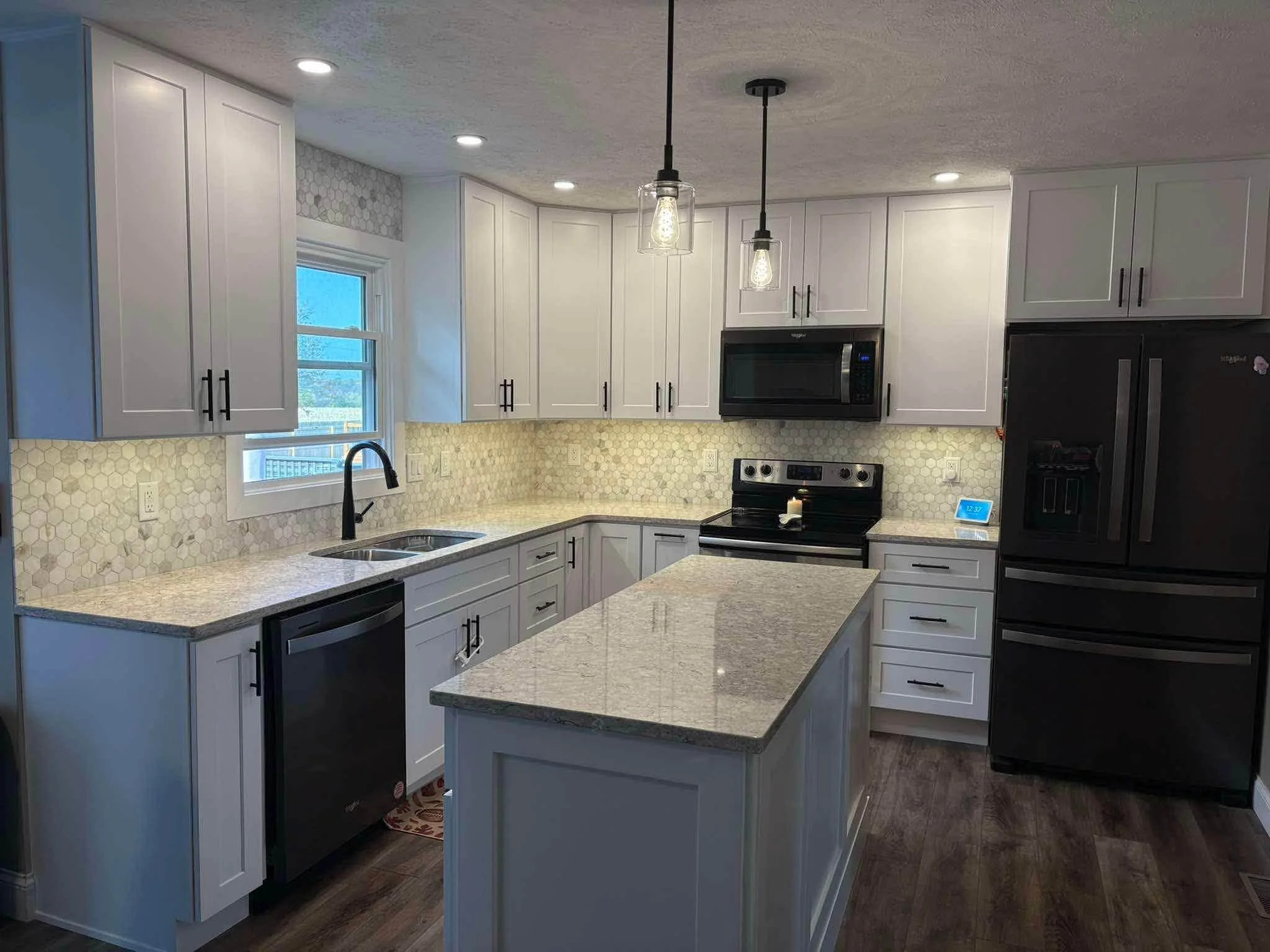
For example, a smooth cabinet door can usually be cleaned with a quick wipe. A cabinet door with decorative grooves requires more attention because grease and dust can settle inside the recessed areas.
The same principle applies to countertops, flooring, backsplashes, and even appliance placement.
A well-designed kitchen should do more than provide enough storage and counter space. It should also allow homeowners to reach the areas that need regular cleaning without moving heavy appliances, using specialized tools, or spending unnecessary time scrubbing.
This is why easy-to-clean kitchen design deserves just as much consideration as appearance, storage capacity, and functionality.
The Hidden Cleaning Problems With Gaps Above Kitchen Cabinets
The space between upper kitchen cabinets and the ceiling is one of the most overlooked cleaning areas in a home.
In kitchens where cabinets stop several inches below the ceiling, the exposed cabinet tops become horizontal surfaces that collect dust. Cooking grease can also settle there, especially when ventilation is inadequate.
Over time, grease and dust can combine into a sticky layer that is much harder to remove than ordinary household dust.
Because these surfaces are high above eye level, homeowners may not notice the buildup until they climb a ladder or begin preparing for a kitchen renovation.
This becomes particularly frustrating when the gap is too small to clean comfortably but large enough to accumulate debris.
How Ceiling-Height Cabinets Can Reduce Cleaning
One solution is to extend upper cabinets to the ceiling, eliminating the exposed horizontal space above them.
Ceiling-height cabinets can also provide additional storage, making them useful in kitchens where every inch matters.
However, taller cabinets are not always the right solution. Ceiling height, cabinet proportions, accessibility, and existing utilities all affect whether this design makes sense.
Another option is to enclose the space with an appropriately constructed soffit or cabinet trim.
The important detail is creating a properly finished transition rather than leaving narrow, difficult-to-reach openings.
Why Kitchen Cabinet Door Styles Affect How Much You Clean
Cabinet doors occupy a significant amount of visible space in most kitchens, but homeowners often select them based primarily on appearance.
What many people don't consider is how the door profile affects everyday cleaning.
Different cabinet styles have different numbers of edges, grooves, and recessed areas where dirt can accumulate.
Shaker Cabinets and Their Recessed Edges
Shaker-style cabinets remain popular because of their simple, versatile appearance.
However, their recessed center panels create inside corners where dust, grease, and food residue can settle.
These areas are usually manageable with regular cleaning, but they require more attention than a completely flat surface.
The narrower and deeper the recessed detail, the more difficult it may be to reach with an ordinary cleaning cloth.
Raised-Panel and Decorative Cabinet Doors
Traditional cabinet doors often include raised panels, curved profiles, and decorative molding.
While these details can create an elegant appearance, each additional groove introduces another surface that needs cleaning.
Cabinets near the stove are particularly vulnerable because airborne cooking grease can settle into the decorative profiles.
Why Slab Cabinet Doors Are Often Easier to Maintain
Slab cabinet doors have flat, uninterrupted faces without recessed panels or decorative trim.
Their simple construction makes them easier to wipe down because there are fewer places for debris to collect.
This doesn't mean slab cabinets are automatically maintenance-free. Glossy finishes may show fingerprints more readily, while certain matte finishes can reveal oils or smudges.
For homeowners who want low-maintenance kitchen cabinets, both the door profile and the finish should be considered.
How Kitchen Cabinet Hardware Creates Extra Cleaning Work
Cabinet handles are small details, but they are among the most frequently touched surfaces in a kitchen.
Every time someone opens a drawer while preparing food, they may transfer moisture, oil, or food residue onto the hardware.
Some hardware designs are easier to clean than others.
Decorative knobs with detailed patterns can trap grime around their bases. Handles with narrow openings may be difficult to wipe thoroughly, especially when fingers regularly contact the underside.
Even the area where a handle attaches to a cabinet can collect residue over time.
Choosing Kitchen Cabinet Hardware That Is Easier to Clean
Simple cabinet pulls with smooth surfaces are generally easier to maintain than highly decorative hardware.
Handles with enough clearance for fingers can also reduce the amount of contact with the cabinet door itself.
However, handleless cabinets are not necessarily cleaner. Some designs require homeowners to touch the door face directly, which can increase visible fingerprints.
Recessed finger pulls may also collect crumbs or residue inside their channels.
The best choice depends on how the cabinets are used, the finish selected, and whether the hardware can be cleaned without difficulty.
Why Kitchen Backsplash Grout Can Become a Cleaning Headache
A kitchen backsplash protects the wall from water, food splashes, and cooking residue.
However, the backsplash itself can become one of the more demanding surfaces to maintain.
The biggest difference often comes down to the number of grout lines.
Small mosaic tiles, for example, require considerably more grout joints than large-format tiles covering the same wall area.
Each joint creates another narrow area where grease and residue may accumulate.
Grout can also be more porous than glazed tile, depending on the product used. Some grout materials absorb stains more readily and require sealing or additional maintenance.
Are Larger Backsplash Tiles Easier to Clean?
Larger tiles generally create fewer grout lines, reducing the number of joints that need attention.
Smooth, glazed surfaces are also typically easier to wipe than heavily textured tiles.
For homeowners who want a particularly low-maintenance kitchen backsplash, large-format tile, suitable solid-surface panels, and certain slab backsplash materials may be worth considering.
Installation quality matters as well.
Properly finished joints and appropriate sealants at changes of plane help prevent moisture and residue from entering vulnerable areas.
A backsplash should not only look attractive when it is installed. It should remain practical after years of cooking, splashing, and daily use.
The Problem With Small Gaps Between Kitchen Appliances and Cabinets
One of the most frustrating cleaning problems in a kitchen is dropping something into a space that is too narrow to reach.
A few grains of rice fall beside the stove. A small piece of food slips between the refrigerator and the cabinet. Dust gradually collects beneath an appliance.
These spaces may seem insignificant, but they can accumulate surprising amounts of debris.
The problem becomes worse when the gap is wide enough for food to fall through but too narrow for a vacuum attachment or cleaning tool.
Why Proper Appliance Measurements Matter During a Kitchen Remodel
Appliances should be considered early in the kitchen design process, not after the cabinetry has already been planned.
Refrigerators, ranges, and dishwashers have specific installation requirements, including clearances for ventilation, doors, connections, and servicing.
A carpenter or kitchen remodeler must account for these requirements while minimizing unnecessary gaps.
Cabinet fillers, finished side panels, and carefully planned appliance openings can help create a cleaner appearance and reduce inaccessible spaces.
However, required appliance clearances should never be eliminated simply to make cleaning easier.
The goal is to balance proper installation, safe operation, and practical maintenance.
How Kitchen Countertop Edges and Seams Trap Dirt
Kitchen countertops receive constant use, making them one of the most frequently cleaned surfaces in the home.
While homeowners often compare countertop materials based on appearance and durability, edge profiles and seams deserve attention too.
A simple eased or gently rounded countertop edge is generally easy to wipe because it has relatively few decorative details.
More elaborate edge profiles may include grooves, ledges, or curved transitions that require additional cleaning.
These features are not necessarily problematic, but they can create places where crumbs and residue settle.
Why Countertop Seams and Joints Matter
Countertop seams are sometimes unavoidable, particularly in larger kitchens or layouts with multiple sections.
When properly installed, they should be neat, stable, and appropriately sealed.
Poorly finished seams can collect dirt or allow moisture into vulnerable areas.
The joint where a countertop meets a backsplash is another important detail. Depending on the materials and installation, an appropriate flexible sealant may be needed to accommodate movement and protect the joint.
For homeowners selecting countertops, it is worth asking how the material, edge profile, and seams will be maintained over time.
Why Open Kitchen Shelving Requires More Maintenance Than Homeowners Expect
Open shelving can make a kitchen feel spacious and visually interesting.
It also provides convenient access to frequently used dishes, glasses, and cooking supplies.
However, removing cabinet doors means removing a barrier that would otherwise protect stored items from airborne dust and cooking residue.
Everything on an open shelf is exposed.
Dishes used daily may not accumulate much dust because they are regularly washed and rotated. Decorative items or rarely used cookware, however, can sit untouched for weeks.
When shelves are located near a cooking area, airborne grease can make the problem worse.
Where Open Shelving Works Best in a Kitchen
Open shelves can be practical when installed away from heavy cooking activity and used for items that are accessed frequently.
They are less convenient when positioned directly beside or above a range where grease exposure is greater.
Shelf material also matters. Smooth, properly finished surfaces are generally easier to wipe than rough or heavily textured wood.
For homeowners who enjoy the appearance of open shelving but dislike constant dusting, a combination of open shelves and closed cabinets may offer a better balance.
How Kitchen Flooring Choices Affect Everyday Cleaning
Kitchen floors deal with spills, crumbs, moisture, foot traffic, and frequent cleaning.
However, the flooring material is only part of the equation.
Texture, grout joints, transitions, and installation details can all influence how much effort is required to keep the floor clean.
Why Textured Kitchen Floors Can Hold More Dirt
Some flooring products have deep textures designed to imitate natural wood, stone, or other materials.
While these textures can provide visual character, pronounced grooves may hold dirt that a quick mop cannot easily remove.
Tile flooring introduces another consideration: grout lines.
Smaller tiles create more joints, increasing the number of areas where residue can collect.
How Flooring Transitions Create Cleaning Problems
The areas where kitchen flooring meets cabinets, walls, or another flooring material should also be considered.
Poorly finished transitions may leave small gaps where crumbs and dust accumulate.
Uneven surfaces can make sweeping and mopping more difficult.
A properly planned flooring installation considers not only appearance and durability but also how easily the finished surface can be maintained.
Homeowners should also choose flooring suitable for kitchen moisture exposure and follow the manufacturer's cleaning recommendations.
Why Kitchen Cabinet Toe Kicks Collect Dust and Debris
The recessed area beneath base cabinets is called the toe kick.
It allows homeowners to stand closer to the countertop without their feet hitting the cabinet base.
This small design feature improves comfort while preparing food, washing dishes, and performing other kitchen tasks.
However, toe kicks can also become collection points for dust, crumbs, and pet hair.
Because the area is recessed, ordinary sweeping may push debris toward the cabinet base rather than remove it.
The problem can become more noticeable when the toe kick has rough surfaces, exposed joints, or unfinished gaps.
How Proper Toe Kick Installation Makes Cleaning Easier
A well-installed toe kick should have a smooth, durable, finished surface that can be wiped or cleaned with a vacuum attachment.
Appropriate sealing at vulnerable joints can also help prevent debris and moisture from entering inaccessible spaces.
The toe kick should remain functional, though. Eliminating the recess entirely may make it less comfortable to work at the countertop.
This is a good example of why low-maintenance kitchen design should not sacrifice everyday usability.
How Poor Kitchen Ventilation Makes Cabinets and Walls Greasy
Cooking produces more than heat and pleasant aromas.
Depending on the cooking method, it can release moisture, airborne grease particles, and other contaminants.
When these particles are not effectively removed, some eventually settle on nearby surfaces.
Cabinet doors, backsplashes, walls, shelves, and even decorative trim can develop a greasy film over time.
This buildup attracts dust and makes ordinary cleaning more difficult.
Homeowners may assume their cabinet finish is responsible for the sticky residue when inadequate ventilation is actually contributing to the problem.
Why Range Hood Placement and Ventilation Matter
A properly selected and installed range hood can help capture cooking contaminants before they spread throughout the kitchen.
However, performance depends on more than the hood's appearance.
Its capture area, installation height, airflow, ductwork, and maintenance all influence effectiveness.
A ducted range hood generally removes cooking contaminants more effectively than a recirculating unit, which filters air and returns it to the room.
Filters also require regular cleaning or replacement according to the manufacturer's instructions.
During a kitchen remodel, ventilation should be planned alongside the cabinetry and appliance layout rather than treated as a last-minute detail.
The Kitchen Sink Design Details That Make Cleaning More Difficult
Kitchen sinks are cleaned frequently, yet certain design details can make the surrounding area difficult to maintain.
One common trouble spot is the narrow space between the faucet and backsplash.
When a faucet is installed too close to the wall, homeowners may struggle to fit a cloth behind it.
Water can remain around the faucet base, allowing mineral deposits and residue to accumulate.
Sink mounting style also affects maintenance.
Undermount vs. Drop-In Kitchen Sinks
Drop-in sinks have a visible rim that rests on the countertop.
Depending on the sink design and installation, residue can accumulate along the rim where it meets the counter.
Undermount sinks eliminate the raised rim on the countertop surface, allowing crumbs and water to be wiped directly into the basin.
However, undermount sinks still have joints beneath the countertop that require proper installation and maintenance.
Neither style is completely maintenance-free.
The countertop material, sink installation, sealing, and faucet placement all contribute to how easily the area can be cleaned.
Why Decorative Kitchen Trim and Moldings Can Be Dust Magnets
Decorative trim can add architectural character to a kitchen.
Crown molding, corbels, furniture-style cabinet legs, and detailed trim panels can make cabinetry feel more customized.
However, these features introduce additional edges and horizontal surfaces.
A simple cabinet face may take seconds to wipe, while elaborate molding requires more careful attention.
Decorative corbels beneath a range hood, for example, may have multiple curves and recessed details where grease can settle.
Furniture-style cabinet legs can also create narrow spaces underneath cabinets that are difficult to reach.
Choosing Kitchen Trim That Balances Style and Maintenance
Homeowners do not need to eliminate decorative trim to create an easy-to-clean kitchen.
Instead, they should consider where the details are installed and how accessible they will be.
Smooth, simpler trim profiles may provide visual interest without creating as many dust-collecting surfaces.
Decorative elements near cooking areas deserve particular consideration because they are more likely to encounter airborne grease.
A skilled carpenter can also help ensure that trim transitions are properly fitted and finished, reducing unnecessary gaps.
How Kitchen Layout Can Make Everyday Cleaning Take Longer
Not every cleaning problem comes from the materials used in a kitchen.
Sometimes, the layout itself creates extra work.
Imagine preparing dinner in a kitchen where the trash cabinet is several steps away from the main prep area.
Every time vegetable scraps need to be discarded, the homeowner must walk across the kitchen.
If the trash can is inconvenient, scraps may temporarily pile up on the countertop instead.
The same problem occurs when cleaning supplies are stored far from the sink or when frequently used items are difficult to put away.
Over time, these small inconveniences can make a kitchen feel harder to maintain.
Why Kitchen Work Zones Matter
A functional kitchen should support the activities that happen there every day.
Food preparation, cooking, cleanup, and storage should have practical relationships with one another.
For example, placing a trash or recycling pullout near the primary food preparation area can make it easier to discard scraps immediately.
Providing accessible storage for cleaning supplies can also encourage quick cleanup after spills.
Good kitchen layout planning does not necessarily mean placing everything close together. It means reducing unnecessary movement while maintaining safe, comfortable working space.
This becomes especially important in households where multiple people cook or clean at the same time.
How to Design a Low-Maintenance Kitchen Without Sacrificing Style
A low-maintenance kitchen does not have to look plain or overly modern.
Traditional, transitional, farmhouse, and contemporary kitchens can all incorporate features that make cleaning easier.
The key is understanding which design details create unnecessary maintenance and choosing alternatives that still fit the homeowner's preferred style.
For example, someone who loves traditional cabinetry might choose a simpler Shaker door rather than a heavily detailed raised-panel design.
A homeowner who prefers decorative backsplash tile could use it as an accent while selecting smoother, larger tiles for the areas exposed to the most cooking grease.
Open shelving might be limited to one section of the kitchen instead of replacing every upper cabinet.
These choices preserve personality while reducing the number of difficult cleaning surfaces.
Five Practical Features Worth Considering During a Kitchen Remodel
1. Smooth, durable cabinet finishes. Choose finishes that tolerate appropriate routine cleaning and avoid unnecessarily delicate surfaces in high-use areas.
2. Carefully planned appliance openings. Minimize unnecessary gaps while maintaining all required manufacturer clearances.
3. Easy-to-maintain backsplashes. Consider smooth surfaces and fewer grout joints in areas exposed to frequent splashes and grease.
4. Accessible storage and trash placement. Make it convenient to put items away and clean up immediately after food preparation.
5. Properly finished cabinetry and trim. Ensure joints, transitions, and exposed surfaces are installed neatly so they do not create unnecessary dirt traps.
The best results come from considering these details before construction begins, when changes are generally easier to incorporate.
Small Kitchen Improvements That Can Reduce Cleaning Without a Full Remodel
Not every homeowner needs to replace cabinets or redesign the kitchen to make cleaning easier.
Several smaller improvements can address common maintenance problems.
For example, replacing highly detailed cabinet hardware with smoother pulls may simplify cleaning around frequently touched areas.
Improving range hood maintenance and using the ventilation system consistently can help reduce grease buildup.
Damaged or deteriorated sealant around sinks and countertop joints can also be replaced with products appropriate for those applications.
Homeowners with open shelving may benefit from moving rarely used items into enclosed cabinets, particularly near cooking areas.
Cabinet organizers and pullout storage accessories can make frequently used items easier to access and put away.
In some kitchens, replacing damaged toe kick panels or correcting poorly finished trim can eliminate places where dirt accumulates.
However, homeowners should avoid sealing appliance openings, ventilation gaps, or other spaces without first confirming their purpose.
Some gaps are necessary for airflow, movement, or servicing.
The most effective improvements address the source of the cleaning problem rather than simply covering it.
What to Consider Before Choosing Kitchen Cabinets, Countertops, and Finishes
Kitchen remodeling decisions are often influenced by photographs, showroom displays, and current design trends.
These are useful sources of inspiration, but they rarely show what a kitchen looks like after several years of daily cooking and cleaning.
A glossy cabinet finish may look beautiful under showroom lighting but reveal fingerprints in a busy household.
A textured backsplash may add visual interest but require more effort to remove cooking residue.
An elaborate cabinet design may create the desired traditional appearance while introducing additional surfaces that need regular dusting.
None of these choices is automatically wrong.
The important question is whether the homeowner understands the maintenance involved.
Before selecting kitchen materials and features, consider how frequently the kitchen is used, how much cooking takes place, whether children or pets are present, and how much time the household wants to spend on routine cleaning.
It is also worth discussing installation details with the remodeling contractor.
Ask how countertop seams will be finished, whether appliance gaps can be minimized, how cabinet trim will meet surrounding surfaces, and what maintenance the selected products require.
These conversations can reveal practical considerations that are easy to overlook when focusing on appearance alone.
A Kitchen Should Make Daily Life Easier, Not Create More Work
A kitchen does not need to be perfectly spotless every moment to be well designed.
It should, however, make ordinary cleaning tasks as straightforward as possible.
The features that create extra work are often surprisingly small: a recessed cabinet detail, an awkward gap beside an appliance, a difficult-to-reach shelf, or a poorly positioned trash cabinet.
Individually, these details may seem insignificant. Together, they can add unnecessary effort to everyday routines.
The good news is that many of these problems can be avoided with thoughtful planning, appropriate materials, and careful installation.
For homeowners considering a kitchen renovation in Bloomington, Normal, or surrounding Central Illinois communities, thinking about maintenance before construction begins can help create a kitchen that remains practical long after the excitement of the remodel has passed.
At Composite Carpentry, kitchen remodeling is about more than improving how a space looks. Thoughtful craftsmanship and attention to construction details can help create kitchens that work better for the people using them.
After all, the best kitchen isn't simply the one that looks beautiful when the project is finished. It's the one that continues to make everyday life easier for years to come.